Slab Leak Detection in Marlboro, NJ
For precise and non-invasive slab leak detection Marlboro NJ homeowners rely on, we isolate pressurized copper pipe breaches buried beneath thick poured concrete foundations without random floor excavation.
Call (201) 510-1615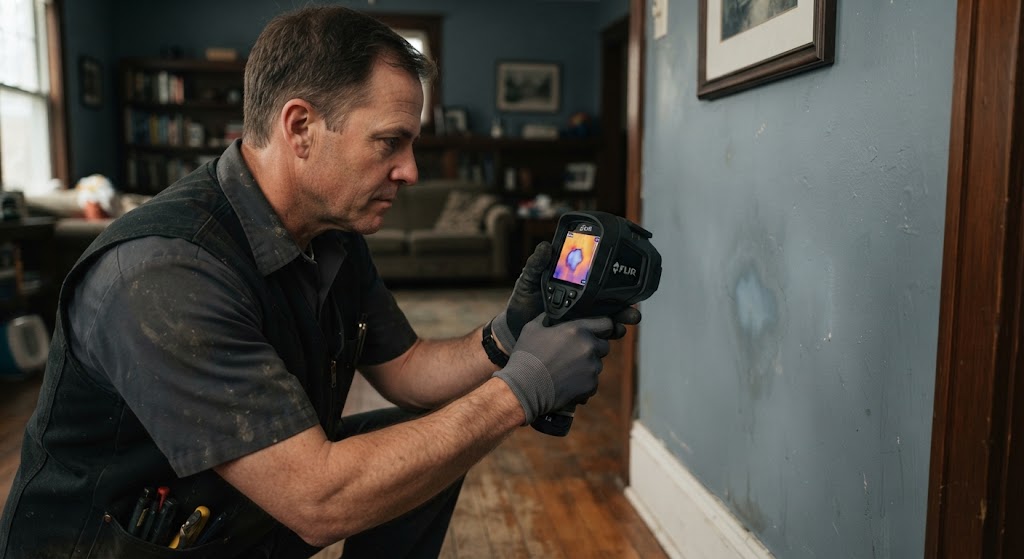
Pinpointing Sub-Slab Pipe Failures in Marlboro, NJ
A slab leak occurs when pressurized potable water lines routed beneath a poured concrete foundation floor develop a fracture or pinhole opening. In Marlboro Township, where many residential homes built across Robertsville, Monmouth Heights, and Morganville sit on monolithic poured slabs or feature finished walk-out basements, water pipes were commonly embedded directly within aggregate beds or encased in concrete during construction.
When an underground pipe fails, water does not always burst directly straight up. Instead, it follows the gravel substrate, undermining soil compaction before emerging along foundation footings or through floor grout lines. Specialized under slab leak detection Marlboro equipment maps the exact point of pipe failure from above the floor surface, preventing random demolition across expensive tile or hardwood floors.
Warning Signs of a Concrete Foundation Slab Leak
Recognizing the signs of a foundation slab leak early allows you to act before structural settlement occurs. Watch for these symptoms:
- Warm Spot on Floor Leak Marlboro: Noticing an unexpected heated zone on your kitchen tile, hallway hardwood, or basement carpet—a telltale sign of a ruptured hot water copper supply line.
- Audible Water Movement: Hearing a steady hiss or faint rushing sound resembling running water when all household faucets and plumbing valves are turned off.
- Cracked Tiles & Damp Carpet Tacks: Floor grout discoloration, loose parquet, warped laminate planks, or moisture saturating carpeting padding along baseboards.
- Continuous Water Meter Rotation: The flow indicator on your water meter spins continuously, indicating uncontrolled water loss even during nighttime hours.
- Sudden Water Bill Escalation: Unexplained spikes in municipal water utility charges reflecting thousands of gallons leaking into the ground beneath your slab.
Why Copper Lines Under Concrete Slabs Fail
The majority of residential homes in Marlboro Township constructed between 1970 and 1995 utilized Type M or Type L soft copper piping beneath concrete slabs. Several local environmental factors contribute to sub-slab failure over time:
First, coarse gravel aggregate beneath the slab rubs against copper tubing as the metal expands and contracts during hot water cycles. This repeated mechanical friction creates abrasion wear. Second, slightly acidic soil chemistry throughout Monmouth County creates electrolytic pitting corrosion on unprotected exterior pipe surfaces. Over decades of pressure cycling, these microscopic weak points become pinholes, requiring timely slab leak repair Marlboro intervention.
Suspect a Leak Under Your Concrete Slab?
Do not allow pressurized water to erode the sub-base beneath your foundation. Schedule an immediate acoustic evaluation today.
Call (201) 510-1615Electronic & Acoustic Pinpointing Methodology
-
1
Pressure Decay Testing
We attach calibrated test gauges to water heater manifolds and main shut-off valves, isolating hot and cold loops to determine which system is losing pressure.
-
2
Electromagnetic Pipe Tracing
A specialized transmitter introduces a low-frequency radio signal through the pipe network. Our locator traces the exact path and depth of the copper line beneath the slab.
-
3
High-Fidelity Acoustic Ground Mic Scanning
Using seismic listening discs and frequency-filtered acoustic equipment, our specialist listens through concrete, tile, and subflooring to identify the high-frequency vibration of escaping water.
-
4
Thermal Differential Confirmation
Infrared thermography maps the thermal footprint of escaping hot water, confirming the precise physical coordinate before any repair work commences.
Repair Options: Spot Repair vs. Overhead Reroute
Once the leak is pinpointed under your slab, you have multiple pathways for remediation depending on pipe age and foundation layout:
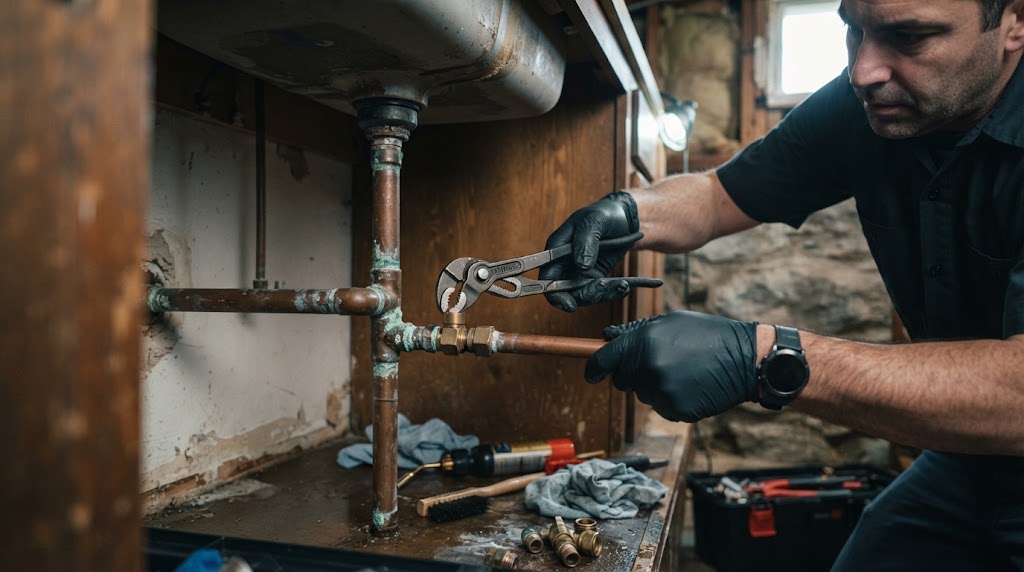
- Direct Spot Repair: If the copper line is structurally sound and the breach is localized, a small opening is created through the concrete directly over the marked point. The damaged section is cut out and replaced with high-grade copper and brazed joints.
- Overhead Pipe Reroute: If the sub-slab copper shows advanced corrosion or sits beneath premium finished flooring, abandoning the sub-slab line entirely is often the smartest choice. A new PEX supply line is routed through interior wall cavities and ceilings, eliminating future sub-slab failure risks.
- Full Home Repiping: In older Marlboro residences where multiple slab leaks have occurred, an engineered whole-house repiping provides long-term peace of mind.
Under New Jersey plumbing regulations, permanent plumbing alterations must be performed in accordance with state building codes by a NJ licensed master plumber .
Cost Factors & Preventative Recommendations
Repair costs vary based on concrete thickness, flooring material (tile, marble, or hardwood), depth of the embedded pipe, and whether you choose a localized spot repair or an overhead PEX reroute. Accurate non-invasive detection minimizes costs by eliminating destructive exploratory digging.
To protect your foundation from future slab leaks:
- Maintain residential water pressure between 50 and 65 PSI using a calibrated pressure reducing valve.
- Monitor water hardness and chemistry to prevent aggressive interior pipe pitting.
- Check your water meter monthly for phantom movement when all fixtures are closed.
When a Slab Leak Demands Emergency Response
If water begins surfacing through baseboards, bubbling under expensive flooring, or causing noticeable foundation settling, immediately shut off your main water valve and water heater supply. Continuing to run water under pressure can erode foundation soil and cause significant structural damage.
This service focuses exclusively on water leak detection. If you ever smell natural gas or suspect a gas line hazard, evacuate your home immediately and contact your gas utility or dial 911 from a safe distance outside.
Marlboro Neighborhoods Where Slab Leaks Are Common
Sub-slab plumbing failures occur frequently in older subdivisions throughout Marlboro Township. We regularly diagnose slab leaks in Monmouth Heights, Robertsville, and sections off Route 79 and Route 520. In these areas, homes built with slab-on-grade foundations have reached the 30-to-50-year service life of original copper plumbing, making non-invasive acoustic diagnostics essential.
Frequently Asked Questions
A warm floor section typically signals a pressurized hot water pipe rupture under the concrete slab. Hot water escaping the pipe heats the concrete mass and transfers upward through tile, laminate, or carpet.
Yes. Pressurized water leaking beneath a slab erodes supporting sub-base soil and creates voids. Over time, this loss of ground support can cause concrete cracking, uneven settling, and structural foundation displacement.
No. While localized spot repair requires creating an access opening directly above the leak, many homeowners choose an overhead pipe reroute through walls and attic spaces, abandoning the damaged line under the slab without disturbing finished flooring.
Locate Your Slab Leak Without Guesswork
Protect your home foundation with non-invasive acoustic pinpointing. Speak directly with a local leak specialist now.
Call (201) 510-1615