Basement Leak Detection in Marlboro, NJ
When you need decisive basement leak detection Marlboro NJ homeowners can trust, our specialists answer whether the moisture in your basement is caused by a pressurized plumbing supply failure or exterior groundwater intrusion.
Call (201) 510-1615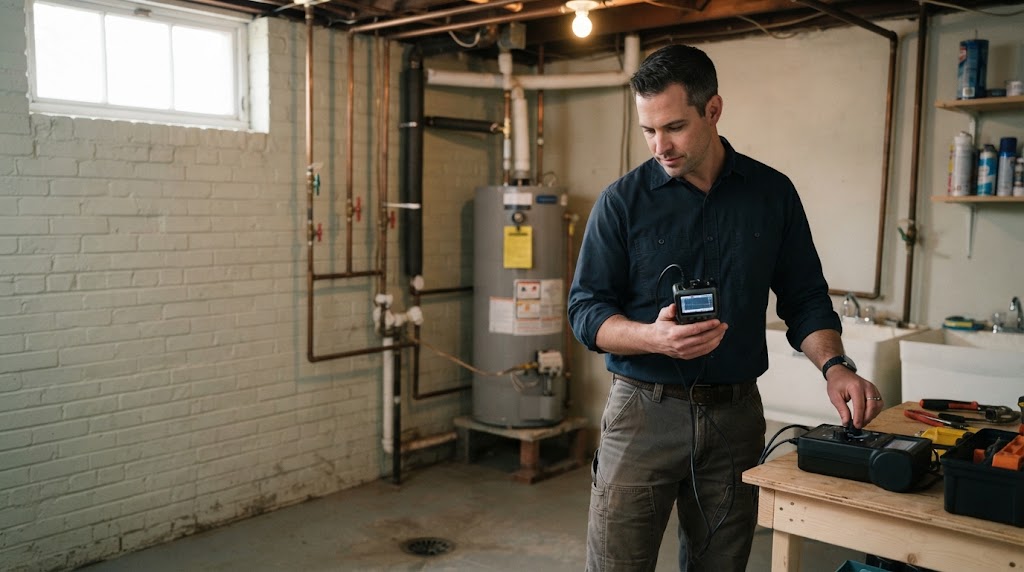
Plumbing Leak vs. Groundwater Seepage in Marlboro Basements
Discovering pooled water on a basement floor is one of the most frustrating experiences for a homeowner. In Marlboro Township, many residences built throughout the 1980s, 1990s, and 2000s in neighborhoods like Morganville, Wickatunk, and Robertsville feature spacious finished basements complete with recreation rooms, home theaters, full bathrooms, and wet bars. When moisture appears along finished carpet edges or drywall partitions, misidentifying the cause can lead to expensive waterproofing mistakes.
While heavy New Jersey rainstorms can drive hydrostatic groundwater through foundation walls, a substantial percentage of basement water problems stem from pressurized domestic plumbing lines hidden behind sheetrock or above acoustic drop ceilings. Our diagnostic protocols determine whether you are dealing with a water in basement plumbing leak Marlboro scenario or exterior surface runoff, ensuring you take the right corrective action.
Warning Signs of Basement Plumbing Failures
Differentiating a pressurized plumbing leak from intermittent groundwater seepage requires observing these key diagnostic indicators:
- Persistent Water During Dry Spells: Water continues accumulating on your concrete slab or carpeting even after weeks of clear, dry weather with no rain.
- Wet Basement Leak Marlboro NJ: Water consistently pooling around interior partition walls, basement bathroom vanities, or utility closets rather than along perimeter foundation walls.
- Basement Pipe Leak Marlboro: Water stains expanding across ceiling drywall directly below first-floor kitchens, laundry rooms, or powder rooms.
- Water Heater Tank & Fitting Seepage: Moisture accumulating under the water heater casing, around temperature and pressure relief discharge pipes, or near drain spigots.
- Sump Pump Discharge Line Leaks: Cracked check valves or fractured PVC discharge pipes spraying water back into wall cavities whenever the pump runs.
Why Finished Basements Conceal Costly Leaks
Finished basements in Marlboro homes conceal hundreds of feet of water supply and drain piping behind studs, fiberglass insulation, and drywall. Cold winter drafts entering through sill plates along the Route 520 and Route 79 corridors can chill uninsulated supply pipes, causing joint fatigue or pinhole breaches.
Additionally, vibrating washing machine supply lines and high household water pressure can stress copper solder joints in older Monmouth Heights residences. Because moisture travels along wood plates before soaking up into drywall, the visual water stain is frequently located far from the actual leaking pipe fitting.
Unsure If Your Basement Water Is Groundwater or Plumbing?
Avoid unnecessary waterproofing contractor expenses. Get a clear scientific diagnosis of your basement water source today.
Call (201) 510-1615Our Multi-Phase Basement Diagnostic Protocol
-
1
Chemical Water Source Analysis
We test standing basement water with precision chemical test strips for free and total chlorine, instantly distinguishing treated municipal tap water from raw groundwater.
-
2
Static Supply Line Pressure Testing
Calibrated digital gauges are connected to test whether the home's potable water supply holds pressure when completely shut down, confirming or ruling out supply line fissures.
-
3
Infrared Thermographic Wall & Ceiling Mapping
FLIR thermal imaging scans locate moisture channels behind basement drywall, identifying thermal signatures created by leaking overhead drain stacks or supply pipes.
-
4
Acoustic Sensor Pinpointing
High-frequency acoustic listening probes isolate the exact coordinate of pressurized water escaping through copper or PEX tubing behind finished basement framing.
What Happens Once the Source Is Identified
Once our diagnostic technician confirms the exact source of your basement moisture:
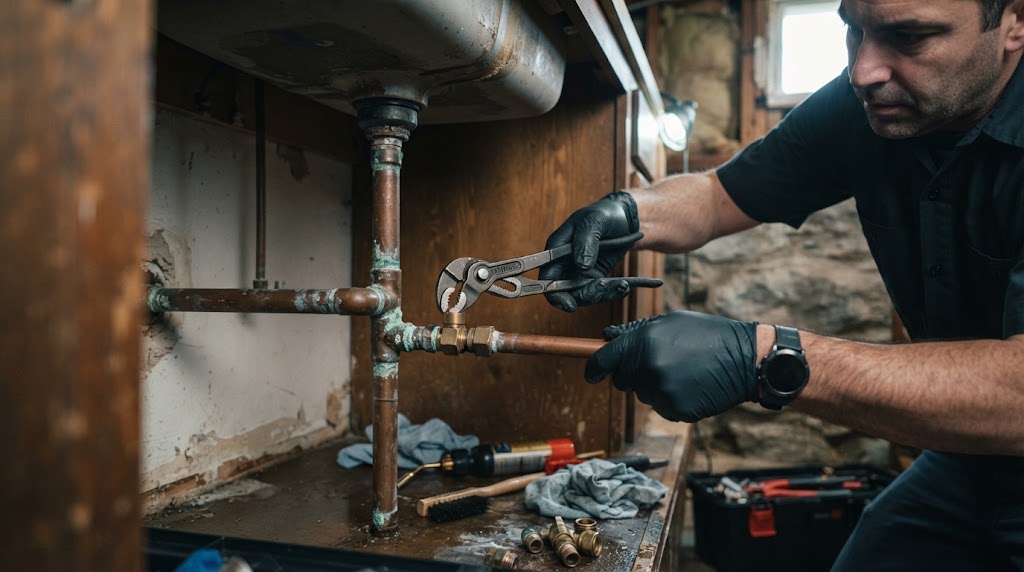
- Plumbing Supply Repair: If the issue is a failed copper pipe, loose fitting, or leaking valve behind sheetrock, a targeted opening is made directly over the marked point for immediate pipe replacement.
- Drain Stack or Fixture Servicing: Leaking tub traps, shower drains, or toilet wax seals serving upper floors are repaired through small localized ceiling openings.
- Water Heater Replacement: If the storage tank has rusted through, replacing the water heater eliminates the hazard before catastrophic tank failure occurs.
Under New Jersey plumbing regulations, permanent modifications to residential potable water and drainage systems must be performed by a NJ licensed master plumber .
Cost Factors & Preventative Recommendations
Diagnostic and repair costs are determined by whether the leak is exposed in an unfinished utility space or hidden behind high-end finished basement drywall, home theater paneling, or custom cabinetry. Rapid pinpointing limits the scope of demolition and prevents secondary mold remediation costs.
To safeguard your finished basement against water leaks:
- Install battery-backup sump pumps with high-water alarm sensors.
- Place water leak sensor alarms beneath washing machines, water heaters, and wet bar sinks.
- Insulate rim joists and sill plates to prevent cold air infiltration from freezing basement pipes.
When Basement Moisture Demands Urgent Emergency Action
If standing water in your basement approaches electrical outlets, baseboard heaters, or your main electrical service panel, do not step into the water. Turn off power from an external dry disconnect switch if possible and shut down your main water supply valve immediately before calling for assistance.
Basements house gas-fired water heaters and furnaces. If you ever detect the sulfur or rotten-egg odor of natural gas while inspecting a wet basement, do not touch electrical switches or light matches. Evacuate the home immediately and call New Jersey Natural Gas or 911 from outside.
Basement Leak Challenges in Marlboro Neighborhoods
Finished basements are an integral living space for families in Morganville, Wickatunk, Robertsville, and Monmouth Heights. High water tables near Big Brook Park combined with complex plumbing configurations in expansive residences make accurate diagnostic testing essential whenever unexpected moisture appears.
Frequently Asked Questions
We test water samples using chemical chlorine test strips and compare them against municipal tap water. If the basement water contains residual disinfectants or appears continuously during dry sunny spells, the source is an active plumbing supply leak rather than external groundwater seepage.
Yes. We combine infrared thermal imaging, calibrated moisture meters, and acoustic listening equipment to locate pressurized pipe breaches or drain stack fissures behind finished basement walls without destructive exploratory demolition.
Common signs include rust streaking along the tank casing, pooling around the temperature and pressure relief discharge tube, damp drywall adjacent to the utility closet, and intermittent rumbling or hissing noises inside the tank.
Get Answers for Your Wet Basement in Marlboro
Don't guess between plumbing leaks and foundation seepage. Speak with our local leak specialists today for accurate testing.
Call (201) 510-1615